
Jan 07, 2026
Choosing Between Polling, SSE, and WebSockets in Production
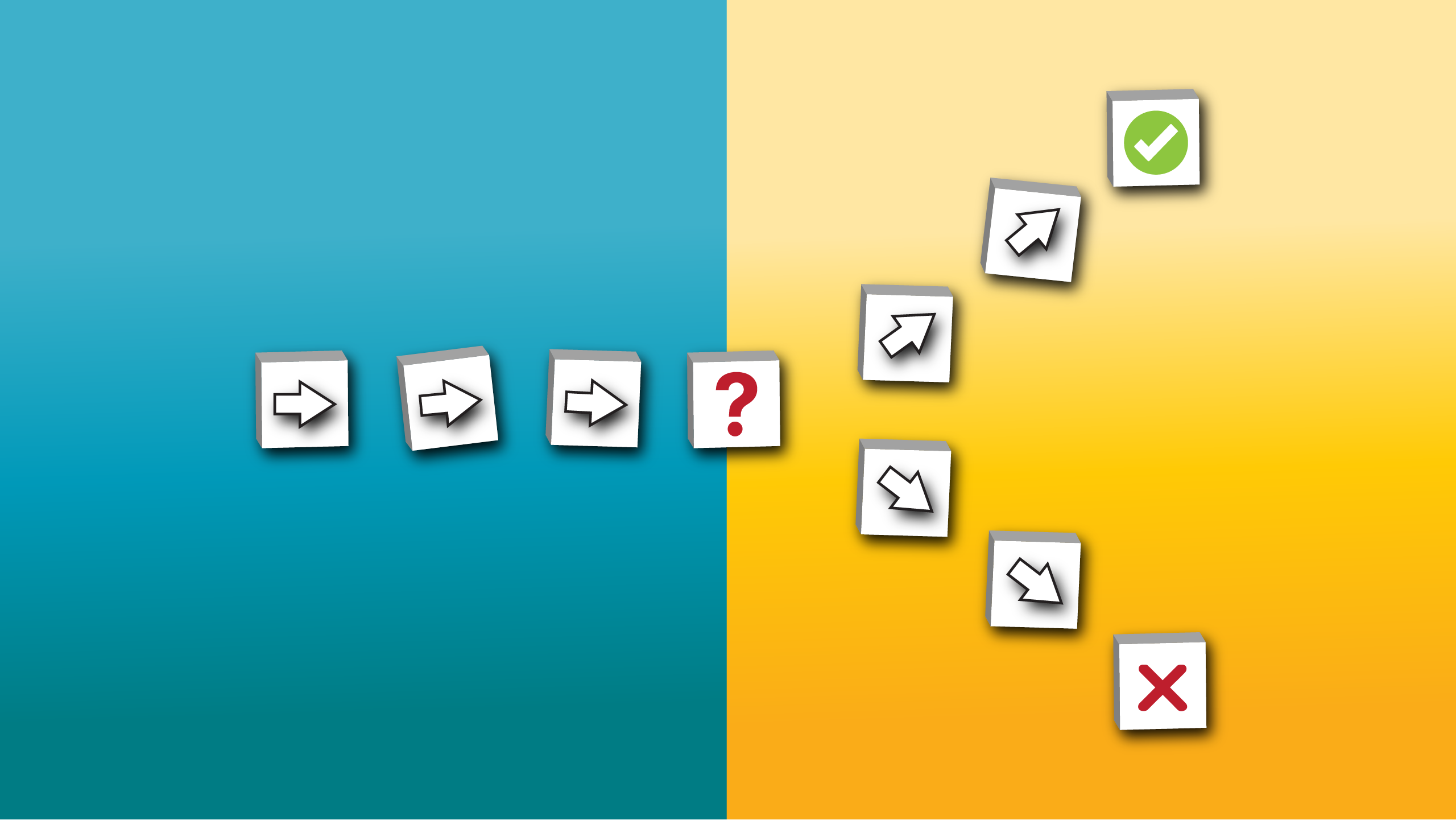
Choosing Between Polling, SSE, and WebSockets in Production
How to think about real-time communication, not just how to implement it
Introduction
This article is not a tutorial on how to implement polling, Server-Sent Events (SSE), or WebSockets.
It assumes you already understand the basics.
Instead, it focuses on how to decide between them in production systems, where infrastructure constraints, reliability, and long-running clients matter more than protocol diagrams.
The question is rarely “Which technology is better?”
The real question is “Which communication model fits this system?”
The goal is not to recommend a single solution, but to show how the same problem can lead to different choices depending on constraints.
I’ll walk through that decision-making process using a real, production-tested system as context, without turning this into a framework-specific guide.
The Communication Problem, Stripped Down
The system in question is a LAN-first, event-based photo sales platform, used during long-running live events.
If you want the broader context, here’s a short project overview: Field-Ready Event Photo Sales System.
- Tablets browsing a photo gallery
- Admin panels managing orders
- A dedicated screen showing or clearing QR codes
Several parts of the UI need to react to server-side changes:
- New photos appearing in the gallery
- New orders becoming visible to admins
- Order state changes reflected immediately
- Screens updating without manual refresh
All state-changing actions already happen through regular HTTP requests.
Clients create orders, confirm payments, or trigger actions via REST.
What was missing was a way to notify other connected clients that something had changed, without aggressive polling or page reloads.
That’s where the choice between polling, SSE, and WebSockets becomes relevant.
Polling: The Baseline Often Dismissed Too Quickly
Polling is often dismissed as “outdated,” but it’s still the baseline against which everything else should be evaluated.
It has clear advantages:
- Works everywhere
- Stateless and easy to reason about
- Trivial to implement and debug
It also has clear trade-offs:
- Unnecessary requests when nothing changes
- Delayed updates between polling intervals
- Wasted resources with many long-running clients
In this system, polling was acceptable for low-priority data, but it was a poor fit for gallery refreshes and admin updates. The cost of repeatedly asking “has anything changed?” outweighed its simplicity.
Polling wasn’t wrong - it just wasn’t the right tool for the core real-time paths.
Understanding What “Bidirectional” Actually Means
A common source of confusion is the idea of bidirectional communication.
At first glance, many systems appear bidirectional even when they’re not. A client sends data to the server, the server processes it, and other clients receive updates.
That flow can be implemented with:
- HTTP requests for writes
- SSE for notifications
This works well, but it relies on two different communication mechanisms.
With WebSockets, sending and receiving happens over the same persistent connection.
With SSE, receiving is persistent, while sending still uses regular HTTP requests.
The difference is not about capability, but about how the connection behaves:
- One shared channel vs. separate mechanisms
- Connection state vs. stateless requests
- Added complexity vs. simplicity
Understanding this distinction is often the turning point in choosing the right approach.
Server-Sent Events as a Notification Layer
Server-Sent Events follow a simple model:
- The client opens an HTTP connection
- The server keeps it open
- Events are pushed whenever something relevant happens
Communication flows only from server to client.
This works especially well when:
- The server is the source of truth
- Clients already use REST to change state
- Real-time updates are notifications, not conversations
In practice, SSE becomes a notification layer on top of a REST-based system:
- A client sends a POST request to create or update data
- The server processes and persists the change
- The server emits a lightweight event
- Connected clients react and fetch fresh data if needed
Business logic stays in REST.
SSE is used purely for synchronization signals.
This separation turned out to be both robust and easy to maintain.
Automatic Reconnects and Long-Running Clients
One aspect of SSE that matters in real systems is automatic reconnection.
Even in stable LAN environments with controlled hardware, browser clients are not guaranteed to maintain a perfect connection forever. Tabs can be suspended, processes restarted, or network interfaces briefly reset.
With SSE, the browser automatically attempts to reconnect when the connection drops. When the client becomes active again, the event stream resumes without user intervention.
For long-running, unattended clients - gallery tablets or kiosk-style screens - this behavior significantly reduces operational friction. The system recovers quietly instead of requiring manual refreshes or user actions.
Why WebSockets Were Not the Right First Choice
WebSockets would have worked technically. That was never the question.
They shine in scenarios where:
- Clients push frequent real-time messages
- Latency in both directions is critical
- Interactions are conversational or continuous
They also introduce additional concerns:
- Connection lifecycle management
- Reconnection strategies
- Stateful connections at scale
In this context, none of the core features required real-time client-to-server messaging. All writes already flowed through HTTP endpoints, and that model was reliable.
Adding WebSockets would have meant:
- Implementing reconnection logic manually
- Managing connection state during long-running events
- Debugging stateful connections when issues arise
- No measurable improvement in user experience
The return on investment didn’t justify the added complexity.
A Practical Decision Framework
When choosing between polling, SSE, and WebSockets, these questions tend to matter more than protocol details:
-
Who initiates updates?
- Mostly server → client → SSE
- Frequent client → server → WebSockets
-
How often do updates happen?
- Seconds or less → SSE or WebSockets
- Tens of seconds → polling is often enough
-
How long do clients stay connected?
- Minutes → any approach
- Hours → SSE handles this gracefully
- Days → reconsider persistent connections entirely
-
What is the operational environment?
- Simple HTTP stack → SSE or polling
- Complex interactive flows → WebSockets
It’s also worth considering what an “idle” connection costs in your environment.
In cloud or serverless setups, a large number of long-lived connections can increase CPU, memory, or process-level costs, even when very little data is being transmitted.
In controlled environments with a known number of clients, that trade-off looks very different and is often predictable.
These questions don’t produce a single correct answer, but they help eliminate the wrong ones early.
Quick Matrix
| Criteria | Polling | SSE | WebSockets |
|---|---|---|---|
| Direction | Client → Server | Server → Client | Bidirectional |
| Complexity | Low | Low–Medium | High |
| Latency | Interval-based | Near real-time | Near real-time |
| Scalability | Poor | Good with HTTP/2 | Good with infra support |
| Best Fit | Legacy, fallback | Dashboards, notifications | Interactive apps |
Common Decision Anti-Patterns
Anti-pattern 1: “WebSocket because it’s modern”
Choosing technology based on hype rather than requirements.
Reality: SSE is often simpler and sufficient for server-driven updates.
Anti-pattern 2: “Polling is always bad”
Dismissing polling without considering its trade-offs.
Reality: Stateless, simple, debuggable - often good enough for non-critical paths.
Anti-pattern 3: “Pick one and use everywhere”
Forcing a uniform communication model across all features.
Reality: Hybrid approaches are often the best solution.
Anti-pattern 4: “Real-time means sub-second latency”
Assuming all updates must be instantaneous.
Reality: Many “real-time” features work perfectly well with small, acceptable delays.
Looking Ahead
The platform is planned to expand with an online storefront, introducing new interaction patterns. Some of those may justify WebSockets, especially for interactive or collaborative features.
That evolution doesn’t invalidate the current choice.
It reinforces the idea that communication models should evolve with requirements, not be locked in prematurely.
Final Thoughts
Polling, Server-Sent Events, and WebSockets are not competing technologies. They solve different problems.
- Polling favors simplicity and resilience
- SSE favors server-driven updates with minimal overhead and automatic reconnection
- WebSockets favor true bidirectional interaction
The most important skill is not knowing how to implement each one, but knowing when to use them - and when not to.
In this system, SSE provided the right balance of simplicity, reliability, and real-time behavior. In another system, the answer may be different - and that’s exactly the point.